The Thing on the Doorstep
The Thing on the DoorstepThe Thing on the Doorstep is the title phrase that frames the tale’s central mystery: an unexplained visitor comes to Daniel Upton’s home in circumstances that point toward Edward Derby but leave the visitor’s identity in doubt. The phrase appears in Upton’s opening account and returns in the final arrival, joining the story’s argument over responsibility to its last, unresolved horror.
Title and Narrative Frame
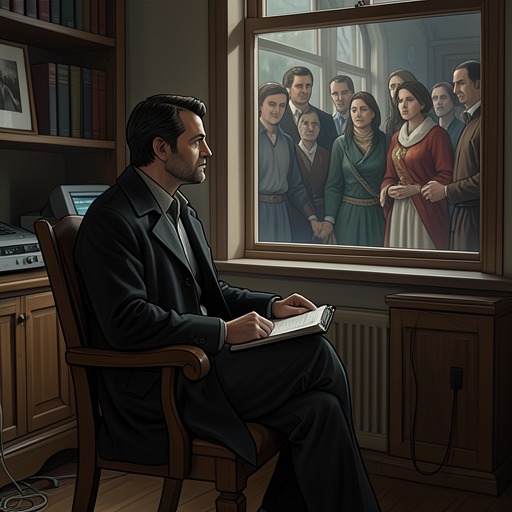
At the outset, Upton presents himself as someone who has acted on a story that others will dismiss as madness. He anticipates that readers may question his account, but argues that the evidence will explain why he believed he had to act. He describes the final visit as the horror behind his decision and maintains that he avenged Edward rather than murdered him. The title’s “thing” therefore names not a clearly explained person or creature, but the disputed reality at the center of Upton’s defense.
The opening also establishes that the police have no satisfactory account of the visit. Their proposed explanation is a prank or warning, while Upton insists that the truth is more terrible than their theory allows. The title gives this unexplained arrival a compact, ominous name before the narrative has shown what stood at the door.
The Final Arrival
Just before two o’clock, a doorbell and knocker wake Upton. Their alternating, uncertain pattern attempts Edward’s old signal of three and two strokes. Upton takes this as a sign that his friend’s former personality may have returned, and hurries downstairs intending to help him. The expectation is overturned when he opens the door: the visitor is a dwarfed, hunched figure, not the Edward he thought the signal promised.
The visitor wears one of Edward’s overcoats, with its hem nearly touching the ground, and keeps its face concealed beneath a hat and muffler. It makes a sound Upton recognizes from an earlier telephone call and presses a closely written paper toward him on a pencil. The writing is Edward’s, though unusually coarse and shaky. These details make the arrival at once a message from Edward and an encounter with someone whose appearance and manner do not fit Upton’s hope that Edward has returned to himself.
The Threshold and Its Significance
The doorstep is the point where Upton’s expectation gives way to direct but incomplete evidence. Edward’s old signal and handwriting suggest continuity; the messenger’s appearance, sound, and mechanical movements make that continuity unsettling rather than reassuring. The visitor follows Upton inside but stops at the inner threshold, extending the title’s boundary image from the outer door into the house.
The phrase thus holds together two kinds of uncertainty: whether Edward has returned, and what the visitor’s connection to him means. The scene does not resolve those questions in the evidence presented here. Instead, the title’s plain domestic setting makes the encounter’s contradiction central: a familiar summons brings an unfamiliar figure to the door, and Upton’s account asks the reader to judge what that arrival proves.